The Great Sphinx The Great Sphinx
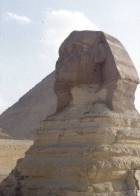 Created from the natural
bedrock at the base of Khafre’s causeway, the Sphinx was the first giant statue built
in ancient Egypt. In terms of scale, the body is carved to 22:1, and the head 30:1. Created from the natural
bedrock at the base of Khafre’s causeway, the Sphinx was the first giant statue built
in ancient Egypt. In terms of scale, the body is carved to 22:1, and the head 30:1.
Why choose a lion for the body? In fact, it was a sensible
choice, as the lion signified both the sun and royalty. Combined with a human head, it
symbolised power controlled by the intelligence of the pharaoh. The nemes headdress
we see on the Sphinx was used to bring the head into proportion with the lion’s body
In front of the Sphinx is the Sphinx Temple, which was not
completed by Khafre, but instead probably by an eighteenth dynasty king.
For much of its existence, the Sphinx has
been entirely surrounded by sand, with the exception of the head. Now that the sand has
for the most part been cleared away, the lion’s body is deteriorating greatly.
Repairs have been going on, however, almost since the Sphinx was first built –
Tuthmosis IV cleared the sand around the creature and built a small open-air chapel
between the paws in the 18th dynasty, about 1,100 years after Khafre’s death. In
February 1988, a piece of rock weighing 30 kilos fell off its shoulder, demonstrating how
vulnerable it is. At the moment, there is an extensive repair programme going on.
|