HOME
XSL Tutorial
XSL HOME
XSL Introduction
XSL Languages
XSL Browsers
XSL Transform
XSL template
XSL value-of
XSL for-each
XSL sort
XSL if
XSL choose
XSL apply-templates
XSL on the Client
XSL on the Server
References
XSLT Elements
Resources
XSL Books

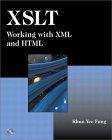
Please visit our sponsors ! XSLT Working with XML and HTML
The description below is the publishers own description.
Book OverviewThis book is about XSLT, or XSL Transformations (XSL stands for Extensible Stylesheet Language), which is a language developed by W3C that can be used to transform XML documents. XSLT is so versatile that it can transform one kind of XML document to another kind of XML document, to an HTML document, or to a text document. This book is for anybody who wants to use XSLT to transform XML documents to HTML documents. We will look at what XSLT is all about, how it is used for transformation to HTML, and especially how to write the XSLT documents for the transformation. Although XML to HTML is the focus of this book, the principles of transformation do not change whether you want to transform XML documents to HTML, XML, or text. Once you know how to produce HTML documents, you will possess the knowledge to produce the other two types as well. The Learning CurveAlthough XSLT has concepts that require some programming fundamentals, it is not necessary to have a programming background. In other words, it is typical of the technologies that Web developers encounter and use every day. The definitions and examples should help you grasp the nonprogramming concepts. This book was written in plain English, with as little computer jargon as possible. However, since you occasionally need to consult the specifications related to XSLT, I have used that terminology in the book. Table of ContentsPART I. PART II PART III PART IV Appendix A: Tools and Resources.
Jump to: Top of Page
or HOME or
Search W3Schools:What Others Say About UsDoes the world know about us? Check out these places: Dogpile Alta Vista MSN Google Excite Lycos Yahoo Ask Jeeves We Help You For Free. You Can Help Us!
W3Schools is for training only. We do not warrant its correctness or its fitness for use. The risk of using it remains entirely with the user. While using this site, you agree to have read and accepted our terms of use and privacy policy. Copyright 1999-2002 by Refsnes Data. All Rights Reserved
|
 Printer friendly page


Active Server Pages Resource Web Site |
|
Your own Web Site? Read W3Schools Hosting Tutorial |
|
ASP Hosting ASP.net Hosting Web Hosting |
|
$15 Domain Name Registration Save $20 / year! |
|
Advertise at W3Schools Only 0.5 CPM |
|
SELECTED LINKS Books Online Web Software The Future of Web Development Jobs and Careers Web Security Web Statistics Web Standards |
|
PARTNERS W3Schools TopXML VisualBuilder XMLPitstop DevelopersDex DevGuru Programmers Heaven The Code Project Tek Tips Forum ZVON.ORG TopXML Search |