HOME
XSL Tutorial
XSL HOME
XSL Introduction
XSL Languages
XSL Browsers
XSL Transform
XSL template
XSL value-of
XSL for-each
XSL sort
XSL if
XSL choose
XSL apply-templates
XSL on the Client
XSL on the Server
References
XSLT Elements
Resources
XSL Books

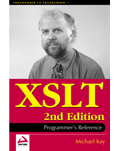
Please visit our sponsors ! XSLT Programmer's Reference 2nd Edition
The description below is the publishers own description.
Book OverviewThis compact, relevant, updated version reflects recent changes in the XSLT specification and developments in XSLT parsers. The material on tools and implementations has been revised; so too have all the examples. It also includes a new chapter on writing extension functions. XML has firmly established itself as the universal standard for managing data for the web and is now being implemented on a wide scale. XSL (eXtensible Stylesheet Language), a vital companion to XML, is used for two main purposes: to format or style XML data so that it can be displayed in a browser and to transform XML data (XSLT). When you transform an XML document, you manipulate the data into a new structure, for example, re-ordering the data. This enables the same data store to be used in an unlimited number of ways. XSLT is a flexible, customizable, and cross-platform language. XSLT is a notoriously difficult language to understand, but this book, while being a complete reference to the recommendation, will also give code examples showing how it all ties together and can be effectively employed in a real-world development scenario. Who is this book for?This book is for programmers already using XML to organize their data in applications and for those who want to use the power and compatibility of XSLT to improve the display of their data. The book is in three parts: a detailed introduction to the concepts of the language, a reference section giving comprehensive specifications and working examples of every feature, and an exploitation guide giving advice and case studies for the advanced user. Table of ContentsIntroduction Appendices
Jump to: Top of Page
or HOME or
Search W3Schools:What Others Say About UsDoes the world know about us? Check out these places: Dogpile Alta Vista MSN Google Excite Lycos Yahoo Ask Jeeves We Help You For Free. You Can Help Us!
W3Schools is for training only. We do not warrant its correctness or its fitness for use. The risk of using it remains entirely with the user. While using this site, you agree to have read and accepted our terms of use and privacy policy. Copyright 1999-2002 by Refsnes Data. All Rights Reserved
|
 Printer friendly page


Domain Name Registration & More! |
|
Your own Web Site? Read W3Schools Hosting Tutorial |
|
ASP Hosting ASP.net Hosting Web Hosting |
|
$15 Domain Name Registration Save $20 / year! |
|
Advertise at W3Schools Only 0.5 CPM |
|
SELECTED LINKS Books Online Web Software The Future of Web Development Jobs and Careers Web Security Web Statistics Web Standards |
|
PARTNERS W3Schools TopXML VisualBuilder XMLPitstop DevelopersDex DevGuru Programmers Heaven The Code Project Tek Tips Forum ZVON.ORG TopXML Search |