Please visit our sponsors !
WAP Development with WML and WMLScript

The description below is the publishers own description.
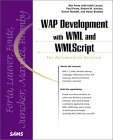 |
Title: WAP Development with WML and WMLScript
ISBN: 0672319462
Pub Date: September 2000
Pages: 608 |
Book Overview
This book introduces WML and WAP as wireless application development tools and teaches the reader how to develop WML applications. The reader will learn about mainstream topics such as security over wireless networks, working with image files for handheld displays, and interacting with wireless users. Readers will also learn about some of the more obscure items that could be needed in their use of WML/WAP, such as dealing with a variety of micro-browser hardware and integrating WAP/WML into standard Web server technologies.
WAP has captured the attention of industry professionals, trade press, and Wall Street for its ability to support wireless devices and platforms.
Contains instructions for generating WAP content in all major languages, including ColdFusion, ASP, Perl, Java, and JSP.
Written by the developers of some of the very first WAP applications created.
Table of Contents
Introduction
Part I - Getting Started
- Chapter 1 - Understanding WAP
- Understanding Servers and Gateways
- WAP Devices
- WAP and WML
- Summary
- Chapter 2 - Introducing WML
- What Is WML?
- Getting Started with WML
- Configuring Your Web Server
- Phones and Emulators
- Understanding WML Usage
- WML Overview
- Summary
- Chapter 3 - Writing for WAP in WML
- Creating Your First Card
- Building Decks of Cards
- Using Basic Navigation
- Summary
Part II - Creating WAP Applications
- Chapter 4 - Card Navigation
- Using URLs
- Tags Used in Navigation: <a>, <anchor>,
and <go>
- Using Phone Buttons and Function Keys
- Navigational History
- Summary
- Chapter 5 - Managing Output
- Basic Card Output
- Layout
- Rendering
- Summary
- Chapter 6 - Using Images
- Using Images and Icons
- Image Restrictions
- Using localsrc Images
- Using Images Efficiently
- Summary
- Chapter 7 - Working with User Input
- Using Variables
- Free-form Input with <input>
- Restricted Input with <select>
- Under-implemented Input Behavior
- Delivering Data to Applications
- Summary
Part III - Advanced WAP Development
- Chapter 8 - Email Integration
- Email and WAP
- Integrating Email into Your Applications
- Summary
- Chapter 9 - Using WMLScript
- WMLScript Versus JavaScript
- Using WMLScript Functions
- Using WMLScript Libraries
- Sample Applications
- Summary
- Chapter 10 - Using Timers
- The Timer Element
- Defining a Timer's Action
- Practical Examples of Timers
- Summary
- Chapter 11 - Receiving Notifications
- Understanding Basic Notifications
- The WAP Forum Push Access Protocol
- The Phone.com Notification Protocol
- Summary
- Chapter 12 - Securing Applications
- Security Basics
- WAP Security Architecture
- Session Management
- WML for Secure Applications
- Summary
- Chapter 13 - Writing for HTML and WML
- Why Two Languages?
- How to Write for Both Languages
- Database-Driven Applications
- Other Languages
- Summary
- Chapter 14 - Best Practices
- Design Philosophies
- Creating a Usable WAP Application
- Differences in WML Implementations
- Differentiating Based on USER_AGENT
- Summary
Part IV - Sample Applications
- Chapter 15 - Currency Converter
- Currency Converter Design Model
- Setting Up the WAP Header
- The Home Card
- Passing and Storing Rate Information
- Displaying the Exchange Results
- Processing with WMLScript
- Complete Code Listings
- Summary
- Chapter 16 - User Directory
- User Directory Design Model
- Application Walkthrough
- Complete Code Listings
- Summary
- Chapter 17 - Scheduling
- Scheduling Application Design Model
- Application Walkthrough
- Complete Code Listings
- Summary
- Chapter 18 - E-Commerce
- E-Commerce Application Overview
- E-Commerce Application Walkthrough
- Complete Code Listings
- Summary
Part V - Appendixes
- Appendix A - Wireless Markup Language Reference
- Wireless Markup Language Reference
- Appendix B - WMLScript Library Reference
- Lang Library
- Float Library
- String Library
- URL Library
- WMLBrowser Library
- Dialogs Library
- Debug Library
- Console Library
- Appendix C - Using Device Emulators
- Understanding Emulators
- Ericsson WapIDE SDK Browser
- Nokia WAP Toolkit
- Phone.com's UP.Simulator
- Appendix D - Writing WML in Popular Development Tools
- Adobe GoLive
- Allaire HomeSite (and ColdFusion Studio)
- Inetis DotWAP
- Macromedia Dreamweaver
- WAPTop EasyPad WAPtor
- Appendix E - Writing WML in Popular Development Languages
- Allaire ColdFusion
- Microsoft ASP
- Perl
- PHP
- Sun JSP (Java Server Pages)
- Appendix F - Local Icons
- Appendix G - CD-ROM Contents
- Device Emulators
- WAP Servers
- Editors and Layout Tools
View
sample chapter
Buy
this book at Amazon USA
Buy
this book at Amazon UK
Jump to: Top of Page
or HOME or
 Printer friendly page
Search W3Schools:
What Others Say About Us
Does the world know about us? Check out these places:
Dogpile
Alta Vista
MSN
Google
Excite
Lycos
Yahoo
Ask Jeeves
We Help You For Free. You Can Help Us!
W3Schools is for training only. We do not warrant its correctness or its fitness for use.
The risk of using it remains entirely with the user. While using this site, you agree to have read and accepted our
terms of use and
privacy policy.
Copyright 1999-2002 by Refsnes Data. All Rights Reserved
|