HOME
CSS Basic
CSS HOME
CSS Introduction
CSS Syntax
CSS How To
CSS Background
CSS Text
CSS Font
CSS Border
CSS Margin
CSS Padding
CSS List
CSS Advanced
CSS Dimension
CSS Classification
CSS Positioning
CSS Pseudo-class
CSS Pseudo-element
CSS Media Types
Examples/Quiz
CSS Examples
CSS Quiz Test
References
CSS2 Reference
CSS2 Print
CSS2 Aural
CSS Units
CSS Colors
CSS Colorvalues
CSS Colornames
Resources
CSS Books
|
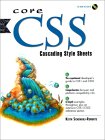
Please visit our sponsors ! Core CSS: Cascading Style Sheets
The description below is the publishers own description.
SummaryFor courses in HTML and Web Page Design. This comprehensive guide to Cascading Style Sheets shows students how to use the CSS effectively in web page design. The example-rich text offers a practical look at the current status of CSS and provides in-depth coverage of how both the CSS1 and CSS2 standards work in current major browsers. PrefaceWelcome to Core CSS. Though Cascading Style Sheets (CSS) have been around for a few years now, it is still underutilized on the Web. The original CSS specification was released by the World Wide Web Consortium back in December of 1996. Since then both Microsoft and Netscape have been slow to implement CSS fully in their respective browsers, and at the time of writing (November 1999) neither the current versions of Internet Explorer nor Netscape Navigator implement CSS fully. Despite this, there are real signs that there is a real drive to make CSS a critical part of Web design in the near future. Browser manufacturers like Opera have pushed for full CSS compatibility, and Netscape has made real efforts to incorporate CSS1 fully and parts of CSS2 into Mozilla, the "precursor" browser to the final release of what will one day become Netscape Navigator 5.0. Web authors are beginning to realize that CSS provides the power they have been asking for in order to have greater control over how things appear and work on screen. Part of being able to use this power is to understand how it all works. That's where this book comes into the picture. Who You AreYou are a Web author who is looking to expand the capabilities of your Web pages. You know that CSS opens the doors to a wide range of possibilities, but want to learn more about how to make the most of it. Or perhaps you know that CSS will solve some of your most pernicious Web formatting problems, but shy away from using it because you have heard that it can produce varying results when viewed under different browsers or under different operating systems. If you fit either of these circumstances, then this book is for you. Table of ContentsI. THE ORIGINS OF CASCADING STYLE SHEETS. 1. The Beginning of HTML and the “Browser Wars.” II. CSS1. 4. Overview. III. CSS2. 14. Overview. APPENDICES. A. CSS1 Property, Pseudo-Element, Pseudo-Class, and Concepts Reference.
Jump to: Top of Page
or HOME or
Search W3Schools:What Others Say About UsDoes the world know about us? Check out these places: Dogpile Alta Vista MSN Google Excite Lycos Yahoo Ask Jeeves We Help You For Free. You Can Help Us!
W3Schools is for training only. We do not warrant its correctness or its fitness for use. The risk of using it remains entirely with the user. While using this site, you agree to have read and accepted our terms of use and privacy policy. Copyright 1999-2002 by Refsnes Data. All Rights Reserved
|
 Printer friendly page


Active Server Pages Resource Web Site |
|
Your own Web Site? Read W3Schools Hosting Tutorial |
|
ASP Hosting ASP.net Hosting Web Hosting |
|
$15 Domain Name Registration Save $20 / year! |
|
Advertise at W3Schools Only 0.5 CPM |
|
SELECTED LINKS Books Online Web Software The Future of Web Development Jobs and Careers Web Security Web Statistics Web Standards |
|
PARTNERS W3Schools TopXML VisualBuilder XMLPitstop DevelopersDex DevGuru Programmers Heaven The Code Project Tek Tips Forum ZVON.ORG TopXML Search |