There was no one place to put
your pyramid, if you were an Egyptian pharaoh. In fact, there are several pyramid sites in
Egypt, which saw use under different dynasties. Here are the main ones:
Saqqara
The plateau of Saqqara had 11
pharaonic pyramids built on it, making it the most-used pyramid site in Egypt. These 11
pyramids do not include the large numbers of satellite ones constructed, now those
belonging to the queens. There are also many hundreds of mastaba tombs there from
every period of ancient Egyptian history – right from the first dynasty to the time
when Christianity became the established religion. In total, the necropolis there is
approximately 4 miles (7.5km) long. In many ways it’s natural that Saqqara should be
the place where the most pyramids are situated, as it overlooks the ancient capital of
Egypt, Memphis.
The
first, and in many ways today the most spectacular, pyramid to be built there was the Step
Pyramid of Djoser. He was followed by his successors in the third dynasty. Saqqara was
then abandoned for a dynasty as the builders moved to Meydum, Dashur and Giza. The last
king of the fourth dynasty, Shepseskaf, returned to Saqqara but chose not to construct a
pyramid, instead preferring to build a large mastaba (Pharaoh’s Bench). The final
pyramid at Saqqara was probably built in the ninth dynasty.
Perhaps the best-known pyramid site, the Giza
plateau was built on over three successive generations in the fourth dynasty. The layout
of the pyramids has excited scholars for many years. Did they reflect the three stars in
Orion’s Belt? Or were they oriented to point the way to the sun temple at Heliopolis
to the north-east, and towards the first royal tombs at Abydos to the south-west?
Certainly, the pyramids are laid out very precisely – the sides of Khufu’s
pyramid (the Great Pyramid) are oriented almost exactly towards true north. At Giza, the
Old Kingdom pyramids reached their greatest level of technical sophistication, and the
classic layout of a pyramid was formalised.


 Where
were the pyramids situated?
Where
were the pyramids situated?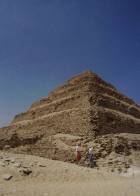 The
first, and in many ways today the most spectacular, pyramid to be built there was the Step
Pyramid of Djoser. He was followed by his successors in the third dynasty. Saqqara was
then abandoned for a dynasty as the builders moved to Meydum, Dashur and Giza. The last
king of the fourth dynasty, Shepseskaf, returned to Saqqara but chose not to construct a
pyramid, instead preferring to build a large mastaba (Pharaoh’s Bench). The final
pyramid at Saqqara was probably built in the ninth dynasty.
The
first, and in many ways today the most spectacular, pyramid to be built there was the Step
Pyramid of Djoser. He was followed by his successors in the third dynasty. Saqqara was
then abandoned for a dynasty as the builders moved to Meydum, Dashur and Giza. The last
king of the fourth dynasty, Shepseskaf, returned to Saqqara but chose not to construct a
pyramid, instead preferring to build a large mastaba (Pharaoh’s Bench). The final
pyramid at Saqqara was probably built in the ninth dynasty.
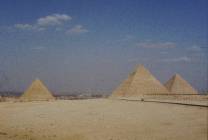 Perhaps the best-known pyramid site, the Giza
plateau was built on over three successive generations in the fourth dynasty. The layout
of the pyramids has excited scholars for many years. Did they reflect the three stars in
Orion’s Belt? Or were they oriented to point the way to the sun temple at Heliopolis
to the north-east, and towards the first royal tombs at Abydos to the south-west?
Certainly, the pyramids are laid out very precisely – the sides of Khufu’s
pyramid (the Great Pyramid) are oriented almost exactly towards true north. At Giza, the
Old Kingdom pyramids reached their greatest level of technical sophistication, and the
classic layout of a pyramid was formalised.
Perhaps the best-known pyramid site, the Giza
plateau was built on over three successive generations in the fourth dynasty. The layout
of the pyramids has excited scholars for many years. Did they reflect the three stars in
Orion’s Belt? Or were they oriented to point the way to the sun temple at Heliopolis
to the north-east, and towards the first royal tombs at Abydos to the south-west?
Certainly, the pyramids are laid out very precisely – the sides of Khufu’s
pyramid (the Great Pyramid) are oriented almost exactly towards true north. At Giza, the
Old Kingdom pyramids reached their greatest level of technical sophistication, and the
classic layout of a pyramid was formalised.